

BRADFORD URBAN WILDLIFE GROUP
Recording, observing & protecting Bradford's wildlife & habitats
Willow Warbler on Gorse Paul Marfell
CC BY-NC-SA 4.0
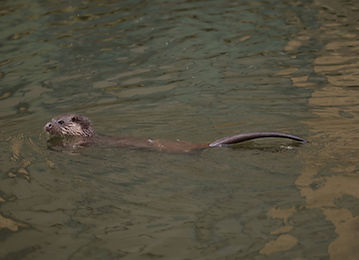
Eurasian Otter (Lutra lutra)
There have been several sightings recorded along the river Aire from Crossflatts to Saltaire. The earliest in 2015, but they have been recorded on iRecord regularly since. Excitement has grown locally as otters have been regularly spotted in Saltaire, delighting everyone that sees them.
The Eurasian otter has been in the UK for millions of years, but unfortunately they were almost driven to extinction in Britain in the 1970’s. Thanks to a hunting ban and improved pesticide regulations and efforts to restore rivers and protect the species, their numbers have increased. There are now around 11,000 in the UK, but they are still considered rare and are a protected species, it is illegal to harm or disturb them, or damage their breeding and resting spots.
Eurasian otters are the only semi-aquatic members of the Mustelid or weasel family, which includes badgers and stoats. They grow to around 3 - 4 feet in length, live in holes in riverbanks called holts and have two layers of fur, an extremely thick and warm inner coat covered by a waterproof outer one.
They are usually solitary, with very large territories. A female territory may cover 30-40 km of riverbank, and a male territory will include several femaies. Females usually give birth to 2 or 3 cubs in the spring, and they will stay with their mothers for about 15 months. Oddly, the cubs aren't born natural swimmers and sometimes have to be forced into to water to learn to swim.
An otter's diet consists mostly of fish and crustaceans and they need a large, unpolluted body of fresh water with plentiful fish to support their active lifestyle. The increase in otter sightings is a sign of improved river health but that doesn't mean we can be complacent. Work on the river Aire needs to continue if we'd like to keep seeing these wonderful creatures locally.
For more otter facts: Rewilding Britain - European Otter UK Wild Otter Trust Yorkshire Wildlife Trust
Otter photo's by Harry Taylor
